What the ongoing upkeep actually is
Strip away the marketing and the real, week-to-week routine comes down to four things. For the full step-by-step routine, including how the rinse is actually done, see how it works.
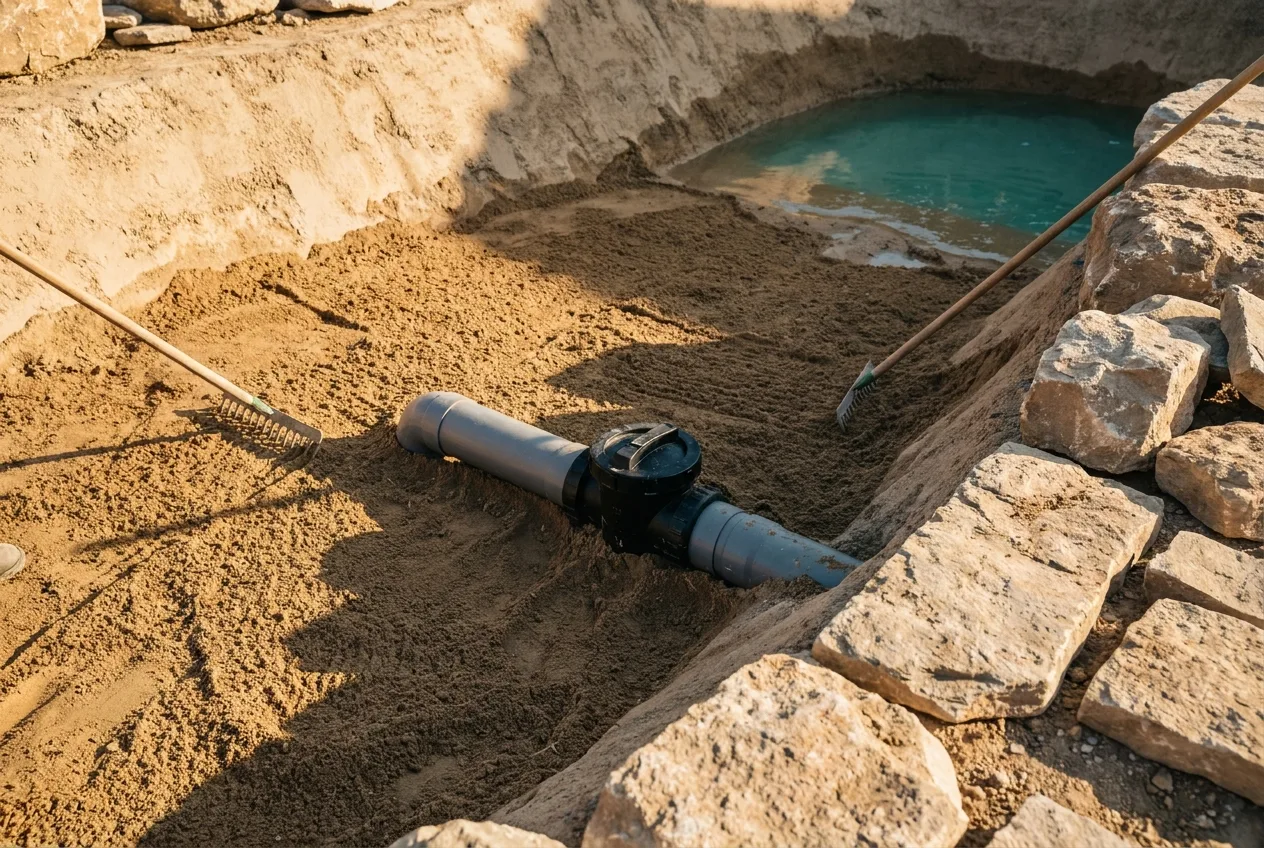
- A weekly filter rinseThis is the core task, and it is the closest thing a full-sand lagoon has to a chore. It is a rinse, not a chemical balancing act.
- Reusable filtersYou rinse and reuse them rather than replacing them on a schedule, so there is no recurring purchase to track.
- A closed-loop systemWater runs through the system with zero water waste, instead of being drained and refilled the way a chlorinated pool periodically needs.
- UV disinfection, not dosed chemicalsFreshwater is kept clear by UV disinfection rather than chlorine or any other chemical you have to measure and add by hand.
How it compares to the chlorinated pool you already know
This is the real question underneath "is a sand lagoon high-maintenance": does it ask more of you than the pool you have, or used to have? A chlorinated pool asks for chemical balancing, algae treatment, a weekly testing kit, and periodic drain-and-refill cycles. Each one is a task with its own schedule, and together they add up to a routine most pool owners just accept as the cost of having water in the backyard.
A full-sand freshwater lagoon replaces that entire chemistry routine with a weekly filter rinse and UV disinfection. You are not swapping one set of chores for another set of equal size. You are trading a chemical routine for a mechanical one, and the mechanical one is qualitatively less day-to-day work.
It also generally runs at a lower operating cost than a traditional chlorinated pool, because there is no chemical demand to keep buying against. We are not going to put a number on that here since it depends on your specific build, but the direction is consistent: less chemistry in, less cost out.
What it is not: a plant-filtered natural pool
If your search for "are natural pools high maintenance" turned up horror stories about algae blooms and constant plant management, those stories are almost certainly about a different category of water feature: a natural pool, or swimming pond, that stays clear through a planted regeneration zone. That zone is a living system, and living systems need tending. Plants get thinned, algae gets managed, and the balance can be genuinely finicky to hold.
A full-sand freshwater lagoon does not have a planted zone to manage. There is nothing to grow, thin, or rebalance. Clarity is engineered, through UV disinfection and a closed-loop system, rather than grown through plants and biology. It is a fundamentally different approach to keeping water clear, and it is why the maintenance-nightmare reputation that belongs to one category does not transfer to the other.
What it still asks of you
We want to be straight with you, because a reader who has been burned by natural-pool horror stories trusts an honest caveat more than a flawless pitch. A full-sand freshwater lagoon is a natural body of water, so it lives outdoors with the seasons, and the weekly filter rinse is a real, recurring task that needs to stay on someone's calendar, yours or whoever cares for your grounds. It is low-maintenance relative to a chlorinated pool. It is not no-maintenance.
We can tell you this plainly because this is what we actually build and stand behind. The weekly routine, refined across our international projects, comes from our own lagoons. We are not describing someone else's product. We are describing ours.